Because You Can, Doesn’t Mean You Should: The Unintended Consequences of Digital Efficiency in Dental Practices
Your practice has a culture and set of values—whether you’ve chosen them or not. One of the biggest challenges I see with practice owners and managers is that they haven’t actively elicited their core values or defined their desired culture. And when values go undefined, culture grows like a garden left untended—often overrun with weeds.
Culture and values need to be cultivated intentionally. If you tolerate behaviours that are misaligned with your vision—no matter how small—you are inadvertently teaching your team that those behaviours are acceptable. And over time, those weeds take hold.
In dentistry, we pride ourselves on being a relationship-based profession. We care deeply about our patients and our colleagues. Yet, in an understandable drive to improve efficiency, accountability, and clarity, many practices are embracing digital solutions that, if introduced without thought, can start to unravel the very culture they’re trying to protect.
The Allure (and Danger) of Digital Efficiency
You are time-poor, stretched clinically, and often pulled in many directions. So it makes perfect sense that you might turn to software tools—task trackers, performance dashboards, automated reminders—to stay on top of things and delegate more effectively.
But are you conscious of the unintended consequences?
While these tools can provide structure and metrics, they often speak a different language than the people using them. And if you’re not careful, the very thing that promises to bring order can end up creating tension, eroding trust, and even driving your team away.
Behavioural Preferences: Seeing the World Through D
ifferent Lenses
People aren’t robots. They don’t operate on code. They bring emotion, values, perspectives, and relational needs to work every day. To bring out the best in your team, you need to understand how they see the world.
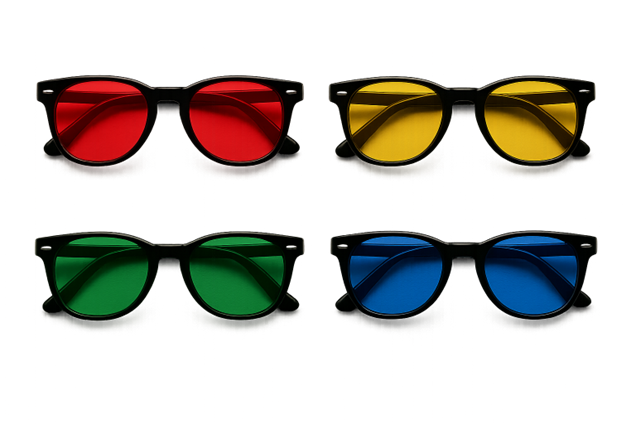
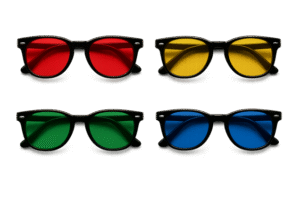
A helpful framework is to consider four behavioural preferences—not personalities, but behavioural tendencies. Think of them like sunglasses that colour how we see and respond to the world:
- Red – High action, high task
- Blue – High thinking, high task
- Yellow – High action, high people
- Green – High thinking, high people
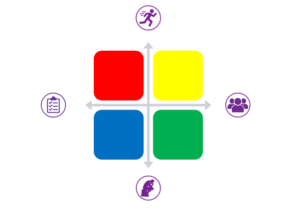
Those who are drawn to IT, systems, and structure typically operate in the blue quadrant. They are logical, accurate, process-driven, and love data. At their best, they produce work of exceptional quality and reliability—exactly what you want when writing code or designing workflows.
But here’s the catch: their tools reflect their filters. So the technology they design tends to focus on compliance, structure, and performance. That can be wonderful—until it’s dropped into a team whose behavioural preferences are very different.
Team Realities: Who’s Wearing What Glasses?
Here’s how the general population tends to fall across the four styles:
- Red: 10–15%
- Blue: 20–25%
- Yellow: 25–30%
- Green: 30–35%
That means your dental team is likely to be predominantly people-oriented: a mix of yellow and green. These individuals are relational, collaborative, empathetic, and thrive on connection. They want to be seen, heard, and valued as people—not processes.
While your blue team members may find performance tracking apps motivating, the yellows and greens may perceive them as impersonal, even punitive. What you introduce to create accountability might, to them, feel like criticism or micromanagement. And that’s where things start to unravel.
When connection is replaced by compliance, the team morale you’ve worked so hard to build can deteriorate rapidly.
People Before Processes
Yes, your team needs structure. Yes, there must be clarity around standards, accountability, and responsibilities. But how these are communicated and enforced must reflect the culture you want to create.
If you value trust, collaboration, kindness, and long-term team stability, then you must speak the language of people—not just process. Introduce systems with thought. Consider how your team will receive them. Involve them in the process. Show them the “why,” and connect it to shared values. And above all, ensure that human connection remains at the heart of your practice.
Sustainable Success Isn’t Found in Software
Sustainability in a dental practice isn’t about short-term productivity spikes. It’s about cultivating a healthy culture, where people love coming to work, feel psychologically safe, and bring their best every day. That kind of success doesn’t come from a dashboard. It comes from leadership, alignment, and understanding how to nurture your team like the unique individuals they are.
If you’d like support in defining your culture, understanding your team’s thinking preferences, and building systems that serve people, not just processes, then I’d be happy to help.
Because just because you can… doesn’t mean you should.
Want to know more about thinking styles and team culture?
Book a free call with me to explore how you can futureproof your practice culture while still embracing smart systems:
👉 Speak With Jane