Mental Wellbeing for Dental Clinicians

When you are not feeling as resilient, confident or able to cope as usual, is it a hardware problem, a software problem, or both? This simple computer metaphor invites dental clinicians to look at the whole system: physical health, sleep and recovery alongside thoughts, beliefs, internal representations and the information we feed our minds.

The Practice You Promised vs The Practice They Joined

A clinician joins expecting mentorship, support and development. The practice believes it has delivered exactly that. So why is one side disappointed and the other confused? This blog explores how the gap between expectation and reality can damage recruitment, retention and working relationships, and why defining words such as mentorship, support, flexibility and clinical freedom before someone joins can prevent problems later.

Emotional Wellbeing in Dentistry: From Overwhelmed to Understood

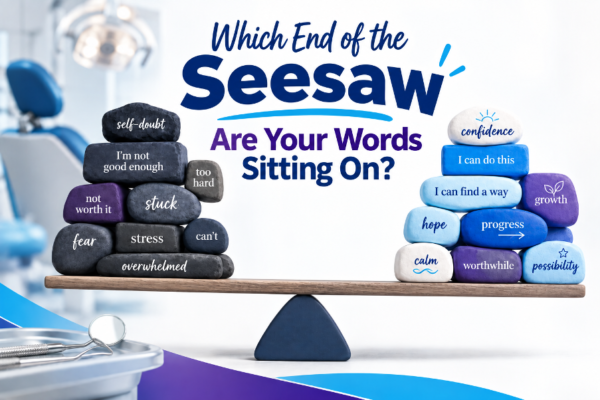
When fear, anxiety, burnout or overwhelm become difficult to manage, it can feel impossible to know what needs to change. By becoming more precise about how you feel, you can begin to understand what your emotions are telling you, recognise patterns from the past and create more supportive choices for the future.

Looking Beyond the Symptoms: What Dentistry Can Learn from Double-Loop Thinking

Most dentists are trained to solve problems quickly and efficiently. Yet many of the challenges we face—low treatment acceptance, team conflict, recruitment difficulties, complaints, stress, and burnout—have a habit of returning despite our best efforts. The issue may not be a lack of skill or knowledge, but the way we think about the problem itself. In this article, we explore the difference between single-loop and double-loop learning, why many dentists remain trapped in cycles of firefighting, and how coaching and SUPER-Vision create the safe thinking space needed for lasting change, improved profitability, stronger leadership, and greater professional fulfilment

Why the Future of Dentistry Needs Exceptional Patient Care Coordinators

Exceptional Patient Care Coordinators are transforming the future of dentistry by helping practices move beyond transactional patient journeys towards deeper, trust-based relationships. This blog explores why the PCC role is no longer simply about treatment plan discussions or diary management, but about creating emotional safety, strengthening communication, reducing patient fear, and helping patients feel genuinely cared for throughout their journey. Discover how relationship-centred PCC systems can improve patient loyalty, ethical treatment acceptance, team culture, and long-term sustainable profitability within modern dental practice.

5 Steps to running on time

Why do so many dentists run late, despite full appointment books? The answer lies in how we think about time. This blog explores the five essential stages of every dental appointment and shows how planning for the whole interaction, not just the treatment, can help you run on time, reduce stress, and create a calmer, more controlled working day.

Practise Makes Permanent: Why Repetition Is Not Improving Your Results

You are working hard. You are repeating what you have always done. And yet the results are not changing. In dentistry, this is where frustration begins. Practice does not make perfect. It makes permanent. So what exactly are you reinforcing every single day, and is it truly taking you where you want to go?