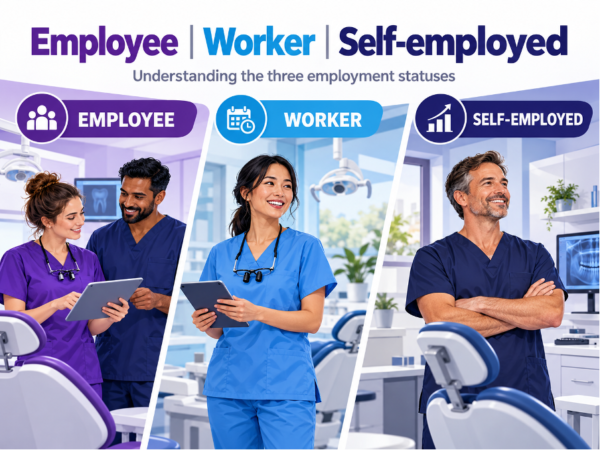
Self-Employed, Worker or Employee? Why Your Dental Contract May Not Tell the Whole Story

A contract may say “self-employed”, but that does not necessarily settle your employment status. For associates, hygienists, therapists, principals and practice managers, understanding the difference between employee, worker and self-employed status is becoming increasingly important. Discover why what happens in practice can matter as much as what is written in the agreement, and the conversations both sides should have before signing.

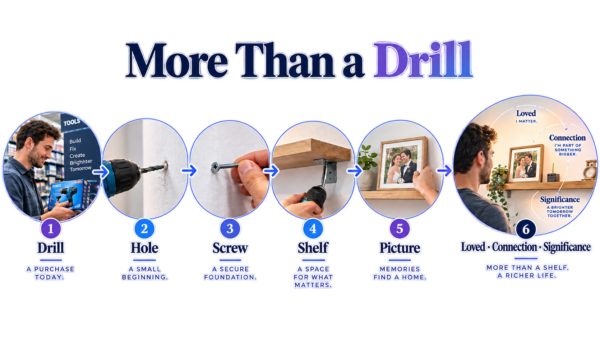
Don’t Just Count Your CPD: Make Your Development Count

Not sure which dental course you should do next? A simple Balance Wheel can help you reflect on your confidence, competence and future goals, identify what really matters, and turn your CPD into a Personal Development Plan that is genuinely personal

Your Patients Aren’t Buying Dentistry. So What Are They Really Buying?

Your patients may ask for whitening, orthodontics or implants, but the treatment is rarely what they are really buying. Discover the emotional drivers behind treatment decisions, the six human needs that influence motivation, and why understanding what truly matters to your patients creates better conversations, stronger relationships and more confident decisions.

Thought Loops in Dentistry: How To Get Unstuck.

Are you solving the same problems, having the same conversations and ending up back in the same place? Discover how habitual thought loops can affect your practice, career, relationships and wellbeing, and how coaching can help you see what has been hiding in your blind spot and create a different way forward.

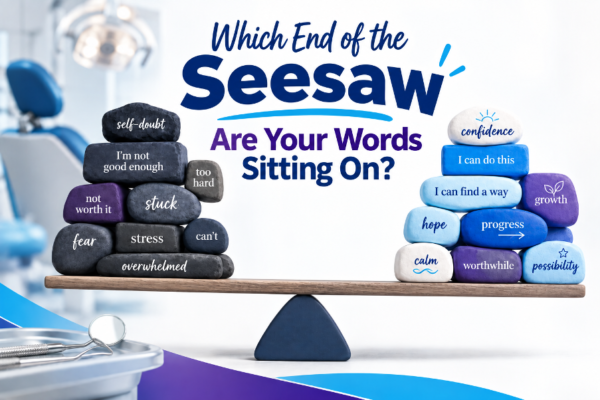
The Words You Use Shape Your Life: Which End of the Seesaw Are You Sitting On?

How often do you really listen to the words you use about yourself, your work and your life? Our habitual language quietly directs our attention, influences how we feel and shapes what we do next. This blog invites you to notice which end of the linguistic seesaw you spend most of your time on, and how small changes in language can create greater choice, confidence and possibility

From Anxious and Exhausted to Calm and Energised: Understanding Your Emotional State in Dentistry

Dentistry can leave us feeling energised and inspired, calm and content, or anxious, frustrated and exhausted. Discover the four emotional zones, understand what may be driving how you feel, and explore personalised thought and action strategies to help you move towards the emotional state you want instea

When Dentistry Hurts: Burnout, Moral Injury and the System Around Us

What if struggling in dentistry is not simply a lack of resilience? Moral injury can occur when clinicians are repeatedly prevented from working in a way that aligns with their values, ethics and the care they want to provide. This blog explores the difference between burnout and moral injury, the pressures contributing to it, and what dentists can do next.

Mental Wellbeing for Dental Clinicians

When you are not feeling as resilient, confident or able to cope as usual, is it a hardware problem, a software problem, or both? This simple computer metaphor invites dental clinicians to look at the whole system: physical health, sleep and recovery alongside thoughts, beliefs, internal representations and the information we feed our minds.

Feeling Overwhelmed in Dentistry? You May Need Space to Think

You may have the qualifications, the patients, the busy diary and all the outward signs of success, yet still feel overwhelmed, stuck or unfulfilled. Perhaps you do not need more advice, another course or somebody telling you what to do. Perhaps you need somewhere to think. Discover why coaching conversations are different, how thinking can become noise, and how the A.G.E.N.D.A coaching framework creates the space for clarity, new thinking and your own answers.

The Practice You Promised vs The Practice They Joined

A clinician joins expecting mentorship, support and development. The practice believes it has delivered exactly that. So why is one side disappointed and the other confused? This blog explores how the gap between expectation and reality can damage recruitment, retention and working relationships, and why defining words such as mentorship, support, flexibility and clinical freedom before someone joins can prevent problems later.