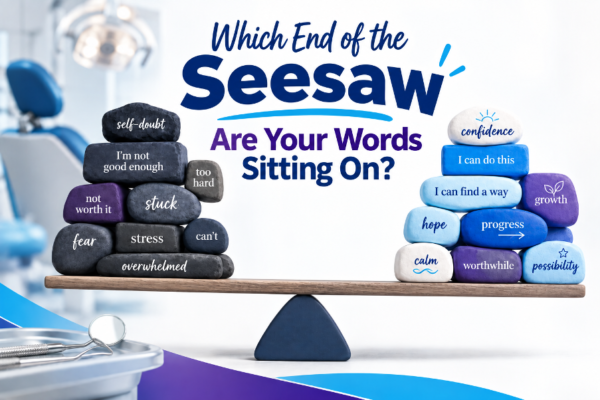
Are you solving the same problems, having the same conversations and ending up back in the same place? Discover how habitual thought loops can affect your practice, career, relationships and wellbeing, and how coaching can help you see what has been hiding in your blind spot and create a different way forward.
How often do you really listen to the words you use about yourself, your work and your life? Our habitual language quietly directs our attention, influences how we feel and shapes what we do next. This blog invites you to notice which end of the linguistic seesaw you spend most of your time on, and how small changes in language can create greater choice, confidence and possibility
Dentistry can leave us feeling energised and inspired, calm and content, or anxious, frustrated and exhausted. Discover the four emotional zones, understand what may be driving how you feel, and explore personalised thought and action strategies to help you move towards the emotional state you want instea
What if struggling in dentistry is not simply a lack of resilience? Moral injury can occur when clinicians are repeatedly prevented from working in a way that aligns with their values, ethics and the care they want to provide. This blog explores the difference between burnout and moral injury, the pressures contributing to it, and what dentists can do next.
When you are not feeling as resilient, confident or able to cope as usual, is it a hardware problem, a software problem, or both? This simple computer metaphor invites dental clinicians to look at the whole system: physical health, sleep and recovery alongside thoughts, beliefs, internal representations and the information we feed our minds.
Many dentists believe that owning a practice will finally bring freedom, security, and fulfilment. Yet for many principals, the journey becomes heavier, lonelier, and far more complex than they ever anticipated.
Through the story of Alex, this blog explores the hidden emotional and leadership journey from associate dentist to practice owner. It reveals why practices evolve through predictable stages, how each stage can become unhealthy if left unchecked, and why so many principals feel stuck, exhausted, or questioning whether to continue at all.
This is not a story about failure. It is a story about growth, understanding, and what becomes possible when dentists are supported to see the whole picture and lead with clarity, confidence, and purpose.
Recruitment challenges in dentistry are rarely caused by percentages, UDAs, or diary gaps alone. Far more often, they stem from a deeper mismatch in values, motivations, and developmental stage between a clinician and a practice. By understanding how both dentists and practices evolve through the Graves Drives, recruitment can shift from frustration and turnover to clarity, alignment, and long-term fit.
Most practice toxicity has nothing to do with bad people and everything to do with mismatched values. The Graves Drives reveal why some teams thrive, others fracture, and why the wrong hire can destabilise an entire practice.
If you want a stronger, calmer, more successful practice in 2026, begin by looking honestly at where you are now. Reflection is the essential first step to informed growth.
Coaching is not something you start when everything falls apart. It is the moment you pause, reflect, and realise that something in your work or life needs clarity, direction, or support. Whether you feel stuck, overstretched, or simply ready for something better, coaching gives you the space, structure, and insight to move confidently from where you are to where you want to be.