Enough is enough – I need to Go It alone

Once upon a time, there was a dentist called Alex, working in a practice that felt chaotic and unsafe.
Alex was the sort of clinician who wanted patients to leave feeling reassured. When things were going well, Alex’s smile was easy and warm, their eyes bright, their posture relaxed. But here, day after day, that ease was harder to find.
On the surface, it was just another busy dental practice. But day to day, nothing felt settled. Materials were inconsistent and sometimes inappropriate, making it difficult to deliver dentistry to the standard Alex believed in. Staffing changed constantly. Team members came and went, morale was low, and trust was fragile. Bills and wages were not always paid on time, creating quiet anxiety that hung in the background of every working day. Alex could feel it in their body, the tightness in the chest, the clenched jaw, the furrowed brow that seemed to appear before the day had even begun.
Patients sensed it too.
They were unhappy more often than not. Complaints were common. Appointments felt rushed and transactional. There was little continuity of care and even less continuity of communication. The team rarely came together. There were no meaningful conversations with leadership, no shared vision, and no sense that anyone was really listening. Alex noticed how that absence of leadership seeped into everything, into tone of voice, into the hurried handovers, into the way people avoided eye contact when something went wrong.
Clinically, Alex began to feel compromised.
Not because Alex lacked skill or care, but because the environment made good dentistry harder and harder to deliver. The constant uncertainty eroded confidence. The lack of structure created risk. The absence of leadership left everyone fending for themselves. Alex found themselves staying later, double-checking everything, trying to protect patients from a system that felt unreliable.
There was no sense of stability.
No sense of belonging.
No sense of safety.
Over time, the impact became personal. Alex felt tense, anxious, scared, and permanently on edge. Their shoulders rounded forward, their energy flattened, their smile became something they had to remember to put on. They worried not just about themselves, but about their patients, their colleagues, and their family. The question quietly formed: How long can I keep doing this?
Eventually, staying felt impossible.
The decision to buy a practice was not driven by ambition or a desire for status. It was driven by a deep need for safety and security, for themselves, their colleagues and their patients. Alex wanted to create an environment where dentistry could be practised properly. Where patients felt cared for. Where teams felt protected. Where systems reduced risk rather than creating it.
This is where many principals begin their journey.
New beginnings

Alex created their new practice with one overriding intention: to feel safe.
Having come from chaos, unpredictability, and insecurity, they wanted this practice to be different. It needed to feel solid, dependable, and contained. From the outset, Alex shaped it as a place where people belonged. A place where patients would feel known and recognised, and where the team would feel protected and cared for. For the first time in a long time, Alex’s shoulders felt lower, their breathing steadier, as if the body could finally unclench.
Traditions formed quickly. Certain ways of doing things became sacred because they worked and because they felt familiar. The same morning routines, the same systems, the same expectations. Alex chose people they trusted and held them close. Loyalty mattered more than speed. Familiarity mattered more than innovation. Alex’s smile returned in this stage, not performative, but real, the kind that reaches the eyes.
In this early incarnation, the practice felt like a family.
The team felt secure. Patients sensed warmth and continuity. Alex felt relief. After years of instability, they had finally built something that felt safe, predictable, and theirs.
But as time went on, Alex began to notice a subtle shift.
What once felt comforting began to feel constraining. New ideas were quietly parked. Suggestions that challenged tradition were met with hesitation. Growth felt uncomfortable, not because it was impossible, but because it threatened the very safety the practice had been built to protect. Alex began to feel a familiar tightness again, not fear this time, but frustration, as if the room had become smaller.
Change was resisted. Difficult conversations were avoided in order to “keep the peace”. Long-standing behaviours were tolerated because of loyalty rather than effectiveness. New team members struggled to integrate unless they fitted neatly into the existing way of thinking. The practice became inward-looking, cautious, and slow to evolve.
Alex felt it most acutely.
They carried the emotional responsibility for everyone. They noticed frustration building alongside guilt. A growing awareness that while the practice felt safe, it was no longer stretching, learning, or moving forward. Alex began to realise that the very structure designed to protect them was now limiting their professional growth.
A quiet question surfaced:
Is this really what I set out to create?
The answer was not to abandon the values of care, belonging, and stability. Those mattered deeply. But Alex could sense that to move forward, to lead with confidence rather than protection, and to build a practice that could grow rather than simply survive, something had to shift.
This was the moment the practice started to evolve, not because it had failed, but because it had succeeded.
With that recognition came a readiness to move into the next stage of leadership and practice evolution. As the practice settled and Alex began to feel safer, something else stirred.
Security alone was no longer enough
Stepping Into leadership

Alex had proved they could build a practice. Now they wanted to lead it. They wanted momentum, movement, and progress. They wanted to do things their way and to do them better than anyone else around them. You could see it in Alex now, the straighter stance, the brighter eyes, the renewed spark that comes when someone decides to step forward rather than hold back.
Alex stepped fully into their role as the boss. Decisions were made quickly and confidently. There was clarity about who was in charge and where responsibility lay. Alex chose the materials, the equipment, the colours, the opening hours, the fee structure, and the way patients were seen. This was their vision, their practice, and their name above the door. This stage brought strength. The practice moved fast. Changes that had once felt risky were now implemented decisively. Alex was bold and visible, setting direction and expecting others to follow. The team felt the energy shift. There was excitement, a sense that something important was being built. The practice began to grow because decisions were no longer delayed by overthinking or consensus. Alex smiled more often in this chapter, a proud, determined smile.
Patients noticed the difference too. The practice felt confident and purposeful. It stood out because it was not trying to copy anyone else. It was clear, distinctive, and led with conviction.
For a time, this worked very well.
But as the practice expanded, the weight of directive leadership began to show its shadow.
Alex was still carrying everything. Every decision flowed through them. Every problem landed on their desk. Because things moved quickly, mistakes happened, yet no one felt safe enough to challenge or question. Team members followed instructions rather than thinking for themselves. Alex started to feel the pressure return as a heaviness in the shoulders, a tiredness behind the eyes.
The frustration once again set in.
Alex became short-tempered under pressure. Frustration replaced excitement. When things went wrong, blame followed. The team stopped offering ideas and started keeping their heads down. Fear replaced enthusiasm. People complied, but they were no longer engaged. Alex’s smile thinned, their brow furrowed more easily, and their posture began to stoop again.
Alex noticed they were working harder than ever yet feeling increasingly alone.
The practice was growing, but Alex was exhausted. Their authority kept things moving, but it also created distance. The very strength that had driven progress was now creating strain. Turnover increased. Small errors went unreported. Alex felt that if they did not stay on top of everything, the whole practice might unravel.
Once again, a familiar thought returned:
This is not what I intended.
As time went on, running the practice from a position of power began to take its toll. Team members were leaving. Those who stayed became quiet, cautious, and withdrawn. Alex carried the weight of every decision, every problem, every outcome. Mistakes happened, yet no one spoke up. People were afraid of being reprimanded, so issues stayed hidden until they became crises.
Alex could see it clearly now.
They had become a dictator-leader, and it was not working. Power had created momentum, but it had not created sustainability. Alex could see that leading through force of will alone was no longer enough. If the practice was to continue growing without burning them out or breaking the team, another shift would be required.
In this incarnation, Alex had taken them as far as it could.
So, Alex began to search for a different way of leading, one that would bring order, consistency, and shared responsibility without losing control altogether.
Something had to change.
The Practice manual

At a course, Alex was introduced to a different way of thinking. The answer, it seemed, was not more control, but better structure. A system that did not rely on personality, mood, or memory. A practice manual. A clear, written guide that explained how everything was done.
This marked the move into the next stage of development.
Alex set about documenting the practice. Every process was mapped out. Step by step, from opening the doors in the morning to closing them at night. From how phones were answered to how patients were managed, from stock ordering to complaints handling. Rules, protocols, and standards were written down so that anyone could follow them. Alex’s mind felt calmer in this chapter, soothed by order and certainty.
The practice was brought back to harmony.
Expectations were clear. People knew what “good” looked like. Tasks were carried out predictably and reliably. Alex no longer had to be everywhere at once. Responsibility was shared. Errors reduced. The practice felt calmer, more organised, and more professional.
There was relief.
Order replaced chaos. Consistency replaced fear. The practice could now function without constant intervention. For the first time, Alex felt they could step back, knowing that things would be done properly even when they were not present.
But over time, the limitations again began to appear.
The manual became heavy. Rules multiplied. What had once brought clarity started to feel rigid. Team members followed processes exactly, even when they no longer made sense. Thinking was replaced by compliance. Initiative faded. Alex began to feel boxed in by their own creation, as if the practice had become a machine that could not adapt.
Unhealthy mindsets crept in slowly.
People stopped asking why and focused only on whether something was allowed. New ideas were dismissed because “it’s not in the manual”. When situations fell outside the rules, no one felt confident enough to adapt. Alex noticed that while the practice ran smoothly, it had become inflexible.
The systems were being served, rather than serving the practice.
Alex felt another familiar tension. While order had reduced stress, it had also dampened creativity and growth. The practice was stable, but it was no longer evolving. The team did their duty, but without enthusiasm or ownership.
Once again, Alex realised that what had once been the solution was now becoming the constraint.
Rules had replaced leadership. Structure had replaced thinking.
And quietly, Alex began to sense that another shift would be required. One that would retain order and reliability, but reintroduce energy, motivation, and progress.
Rules had brought stability and now the practice needed momentum again.
Awards and goals

By now, the practice was running smoothly. Systems were in place. Roles were clear. Order and consistency had replaced firefighting. And yet, Alex could feel it. Something was missing.
Duty and order were working, but they were no longer inspiring.
The practice felt stable, but flat. Predictable, but uninspiring. Alex realised they needed a new source of energy, something that would reignite momentum and ambition.
The dentist and practice needed a shift.
After flicking through journals and attending conferences, the answer seemed obvious. Success was measurable. Growth could be tracked. Progress could be rewarded. The practice needed goals, targets, and incentives. Key performance indicators would show exactly how well they were doing. Awards would recognise achievement. Results would prove they were moving forward. Alex felt the spark of competitive excitement again, the upright posture, the brisk pace, the sense of purpose.
Competition brought excitement back into the practice.
The team had something to aim for. Clear goals created focus. Financial performance improved as the practice became more commercially astute. Decisions were guided by data and the quest to win awards, rather than instinct alone. The practice grew, patient numbers increased, and Alex felt a renewed sense of pride.
Recognition mattered. Awards were won. The website showcased achievements. The practice stood out in the market. People wanted to join. Alex felt validated. All the hard work was paying off.
For a time, it felt like they had cracked it.
But slowly, the practice began to overreach.
Targets increased. KPIs multiplied. Everything was measured, tracked, compared. Numbers became the primary language of success. Conversations shifted from patients and people to percentages and performance charts.
Unhealthy version took hold.
The pressure intensified. Goals became onerous. Team members felt constantly judged by metrics that did not reflect the full complexity of their work. Competition replaced collaboration. Fear of missing targets crept in. People focused on what was measured rather than what mattered.
Alex noticed the cost.
Despite strong financial results, energy drained from the practice. Team members felt unseen unless they hit numbers. Dental treatments had become transactional and lacked care and compassion. Alex themselves felt trapped by the very targets they had set, always chasing the next milestone, the next award, the next benchmark. The smile became rarer again, replaced by that familiar furrowed brow and a heaviness in the chest, stress, tension anxiety and Imposter syndrome took hold.
Winning no longer felt satisfying.
The practice was successful on paper, yet something essential had been lost. Once again, Alex recognised a familiar pattern. What had driven growth was now driving exhaustion. The practice was achieving, not thriving.
Targets had delivered results and they had also created strain.
Quietly, Alex began to question whether success measured solely by numbers could ever be enough. Another evolution was calling, one that would restore meaning, connection, and purpose beyond the scoreboard.
Another evolution was needed.
Take care of your team and they will take care of your business

The dentist and the team had worked relentlessly. They had achieved a great deal. Profits were strong. Awards lined the walls and featured proudly on the website. Patients were flooding in. On the surface, they had won the race.
Yet, something felt wrong.
Despite the accolades, there was a constant sense of chasing. Targets were always just out of reach. As soon as one goal was met, another replaced it. Nothing ever felt quite good enough. Success was measured, but never truly felt. Alex began to notice how even celebrations felt brief and tense, as if everyone was waiting for the next demand.
Beneath the performance metrics, Alex was exhausted. They seldom saw their family or friends. The pressure of meeting targets sat heavily on their shoulders, and much of the responsibility still rested with them. When two valued team members left, the reason became painfully clear.
Winning had mattered but it had come at a cost.
The awards spoke of achievement, but they did not tell the whole story. The team had worked hard, yet they felt judged by numbers rather than valued as people. Conversations had become dominated by targets, KPIs, and outcomes. The culture quietly shifted into competition and comparison. Even when results were strong, there was a lingering feeling of failure.
The practice was profitable, well paid, and highly visible, yet it felt increasingly strained. Success was something to be defended, not enjoyed.
For some, the pressure was too much.
For Alex, it no longer felt worth it.
With clarity, Alex recognised they were no longer prepared to sacrifice their home life or their wellbeing in pursuit of another award or stretch target. The constant striving had drained the joy from both leadership and dentistry. There had to be another way.
Looking back, Alex could see the pattern. They had driven. They had taken control. They had pushed to win. Much of the journey had been about I, me, my. Perhaps now it was time to shift to we, us, our.
This marked the move into another phase.
Alex began to explore what it would truly mean to involve the team. Not just in tasks, but in purpose. Not just in delivery, but in direction. They wanted to build a culture rooted in harmony, respect, and collaboration. A practice where everyone had a voice and felt valued.
A new belief emerged and became the guiding principle:
Take care of your team, and they will take care of your business.
In its new incarnation the atmosphere of the practice was revitalised
Team meetings became conversations rather than briefings. People were invited to share their views and felt genuinely listened to. Decisions were discussed rather than imposed. Alex consciously developed a different leadership style, motivating through encouragement, empathy, and inclusion.
The practice began to feel human again.
Trust grew. Relationships strengthened. People supported one another. A shared vision started to form, and with it a sense of collective ownership. Patients noticed the difference. The practice felt calmer, warmer, and more connected. Alex’s face softened in this stage. Their smile returned, gentler now, less driven, more present.
For a time, this felt like the answer.
As before, the shadow side slowly emerged.
Unhealthy teamwork showed itself quietly.
The desire for harmony made difficult conversations uncomfortable. Performance issues were softened or avoided altogether. Consensus replaced clarity. Decisions took longer as Alex tried to ensure everyone felt comfortable and included.
The practice became kind, yet less decisive.
Stronger voices dominated discussions, while quieter team members faded into the background. Standards slipped, mediocrity developed in the name of understanding. Boundaries blurred as Alex absorbed the emotional weight of keeping everyone happy. You could see it in Alex again, that slightly hunched posture, the tired eyes, the careful smile used to steady the room.
Once again, a familiar frustration surfaced.
The team felt supported, yet progress slowed. Important decisions lingered unresolved. Alex began to realise that while community and care were essential, leadership could not disappear. Compassion alone could not replace direction, structure, and accountability.
Teamwork had brought connection, however, on its own, it was not enough to sustain growth.
Once again, Alex found themselves standing at the edge of another transition, sensing that the practice was ready for its next evolution.
The jigsaw comes together

Having focused so intently on building a sense of togetherness, Alex reached a point of deep frustration.
They had tried everything they knew how to do. Team meetings were held. Conversations were opened up. They listened more, explained more, included more. Every intention was good. And yet, nothing seemed to shift. The team could not see where the practice was going or how their individual roles fitted into the bigger picture. Despite goodwill, they did not feel like a cohesive team.
Alex felt utterly stuck.
Good intentions were no longer enough. Togetherness without direction was creating confusion rather than clarity. The harder Alex tried, the heavier it felt.
Late one evening, long after the practice had closed, Alex sat alone with the question they had been trying to avoid.
“Should I sell, or should I stay?”
The practice that had once represented freedom now felt like a burden. Sleep was elusive. The mental load followed Alex everywhere. They replayed conversations, worried about finances, staff, patients, and their own wellbeing. They wondered how something built with such care had become so exhausting.
It was in this place, at the depth of uncertainty, that Alex met Coach Purple Jane.
Jane brought with her not only years of experience as a coach, but the lived understanding of having owned and run a dental practice herself. She understood dentistry, business, teams, and the emotional weight of leadership. More importantly, she could see what Alex could not.
Jane helped Alex make sense of what was happening.
Jane showed Alex that nothing had gone wrong. That each phase of the journey had been a natural response to unmet needs. That the practice was not broken, it had become stuck in patterns that no longer served it. Together, they untangled the complexity and began to reconnect the pieces.
For the first time in a long while, Alex felt understood.
As clarity emerged, Alex found themselves saying, quietly and honestly,
“I wish I had met you ten years earlier. You would have saved me so much stress, time, and money.”
What Jane offered was not another tactic or quick fix. She offered perspective a safe space to think.
Alex began to see that dental school had trained them to be a clinician, not a leader of a complex organisation. Finance, time management, marketing, sales, organisational design, leadership, and people management had never been part of the curriculum. No wonder they had felt overwhelmed. No wonder the weight had felt unbearable at times.
What Alex needed now was not more effort, nor more harmony, but a different way of thinking.
This marked the move into learning.
With guidance and support, from Jane, , Alex made a deliberate decision to invest in themselves and the team. They attended seminars, training days, and workshops together, Jane taught them when they needed to look outside for answers and how and when to look Inside. Alex recognised that the practice could only grow as quickly as their own thinking allowed it to and how much they Invested In their team. Gradually, capability increased. Confidence grew. The team developed skills and language they had never had before.
The practice flourished.
Alex reflected on the previous years, looking back they felt as though over time they had collected all the pieces of the jigsaw that they needed to build a successful practice, and they had not known how to put them together,
With Jane’s support, Alex was invited to think differently again. This was not about adding more knowledge, but about integrating everything they had learned so far. They were at last able to connect the pieces of the jigsaw.
This was the transition into integration.
Strategic thinking changed everything.
For the first time, Alex stopped trying to choose the single “right” way to run the practice. Instead, they could see how every stage they had lived through had been necessary. Safety had mattered. Power had mattered. Structure had mattered. Achievement had mattered. Community had mattered. Learning had mattered.
None of them were wrong.
With this integrated way of thinking, Alex could now hold all of these perspectives at once. They could step back and see the practice as a living system. Patterns were recognised early, before problems took hold. When tensions arose, Alex could see which way of thinking was dominating and which was missing.
They no longer reacted.
They responded.
Now with Jane at their side, Alex, with all their experience, the lessons learned, no longer panicked when challenges appeared, they acted thoughtfully and confidently Mistakes were caught early. Course corrections were made calmly. Decisions were taken with context rather than emotion.
The team noticed the shift.
Leadership felt steadier. Clearer. Less driven by fear or ego and more by understanding. Alex no longer swung from one extreme to another. Instead, they integrated the best of what had come before, using structure when needed, ambition when appropriate, care when required, and learning as a constant.
The practice moved from being reactive to being responsive.
People understood not just what they were doing, but why. Each role made sense within the wider system. Alex was no longer carrying everything alone., Jane shared the burden. At last the practice felt aligned.
As Alex reflected on the journey, they could see that building a practice had never been just about dentistry. It was about integrating values, motivations, systems, people, and purpose into a coherent whole.
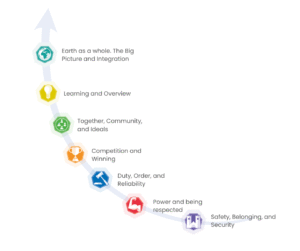
Each stage of development had played its part:
• Safety and security
• Power
• Duty and order
• Winning
• Community and togetherness
• Learning
• Seeing the whole
Every step had been essential.
Only by recognising, respecting, and integrating the diversity of thinking within themselves and their team had Alex created a balanced, resilient, and successful practice.
The practice no longer depended on one way of thinking.
It could evolve.
And in doing so, it created a legacy not just of clinical excellence, but of wisdom, adaptability, and shared purpose.
The end.
If you see yourself in Alex, this is your invitation to pause and choose a different path.
Jane is here to share the burden with you, to guide and support you in creating the practice you always dreamed about. The Blueprint for a Better Practice has been designed for you
- if you intend to become a principal within the next five years,
- if you are a new principal and have discovered it is far harder than you anticipated,
- if you are an experienced principal feeling frustrated by the current incarnation of your practice.
You can find full details in the brochure here:
https://iodb.co.uk/wp-content/uploads/2025/11/MASTER-The-Blueprint-For-A-Better-Practice-November-2025.pdf
You can also book a complimentary Speak with Jane conversation via the website at www.iodb.co.uk.
Places are limited to just 10 practices per intake. Act now to avoid finding yourself in the same place, with the same stress and anxiety, this time next year. Let us make 2026 your best year yet.