**Why Private Dentistry Needs a Clear Clinical Career Pathway
(and Why NHS Thinking Holds Practices Back)**
For clinicians working within the NHS, there is one unavoidable truth: every UDA is paid at the same rate, regardless of who carries it out. A newly qualified dentist, a therapist with a narrower scope of practice, and a clinician with 30–40 years of experience and extensive postgraduate training are, in the eyes of the NHS contract, financially identical.
Many would argue this system unintentionally disincentivises skills development, because additional training, experience and mastery are not rewarded within the NHS remuneration model. The fee per UDA is fixed, and although UDA contract values vary from practice to practice, the amount paid to the clinician for completing that UDA at all stages of your career does not.
But the moment a clinician steps outside the NHS into private practice, the rules change completely.
Private Dentistry Frees You to Think Differently
In private practice, you become the architect of:
- your own fee schedule
- the type and quality of clinical care you provide
- the time you allocate to each patient
- the materials and equipment you choose
- the team you build
- the culture, values and philosophy you embed
- the remuneration and rewards your clinicians receive
And yet, despite this freedom, many clinicians unknowingly carry NHS thinking with them into private practice, continuing to charge a flat fee regardless of skill, experience, or training level.
We and our team members would like to earn incremental rises in renumeration linked to experience, qualification, skills development, and that seems fair doesn’t it? Yet it cannot be achieved with fixed fee pricing.
In Other Professions, Experience Determines Fees
Look at the legal profession.
There is a well-defined career pathway, with clear differentiation in fees and expectations at each step:
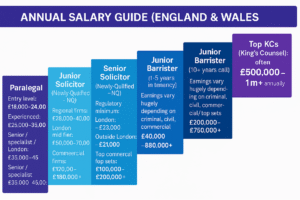
Annual Salary Guide (England & Wales)
Paralegal
• Entry level: £18,000–£24,000
• Experienced: £25,000–£35,000
• Senior / specialist / London: £35,000–£45,000+
Junior Solicitor (Newly Qualified – NQ)
• Regional firms: £28,000–£40,000
• London mid-tier: £50,000–£70,000
• Magic Circle / US firms: £100,000–£150,000+
Senior Solicitor (5+ years PQE)
• Regional firms: £45,000–£70,000
• London / commercial practice: £75,000–£120,000
• Top commercial firms: £120,000–£180,000+
Barrister in Pupillage
• London: ~£23,000
• Outside London: ~£21,000
• Commercial / top chambers: £50,000–£80,000+
Junior Barrister (1–5 years)
• Criminal / legal aid: £25,000–£60,000
• Civil / family: £40,000–£80,000
• Commercial / top sets: £100,000–£200,000+
Senior Barrister (10+ years)
• Criminal / legal aid senior junior: £60,000–£120,000
• Civil / family: £80,000–£180,000
• Commercial / specialist: £200,000–£750,000+
Top KCs (King’s Counsel)
• Often £500,000–£1m+ annually
As a client, you would expect to pay differently for a paralegal, a solicitor, a senior solicitor and a barrister. And you would expect the standard, depth and sophistication of advice to differ between those roles.
The same is true in hairdressing.
You would never expect the same price from a:
- Stylist
- Senior Stylist
- Creative Stylist
- Director
- Senior Director
…because you know the skill, speed, confidence, creativity, and outcome will differ.

Why Should Dentistry Be Any Different?
If a patient is choosing between:
- a newly qualified clinician
- a therapist with a narrower scope
- a dentist with 20 years’ experience and multiple postgraduate qualifications
…is it fair for them to pay the same fee?
Patients value expertise, precision, outcomes, bedside manner, clinical confidence, and experience. These things matter deeply to them, especially in healthcare. How are you able to differentiate competencies?
Is it appropriate the patient pays £950 for a crown from a clinician who has studied advanced restorative skills, understands dynamic occlusion, and has a 30 year track record of success and also pays £950 for a crown provided by a newly qualified dentist who provided one crown as an undergraduate, with no post graduate training in restorative treatments or occlusion
To honour clinicians, reward development, and reassure patients that fees are fair, dentistry needs what many other professions already have:
A Clinical Career Pathway with Transparent, Differential Fees
When you leave the NHS, you have the freedom to design:
- a career ladder
- increasing levels of clinical responsibility
- remuneration linked to skill, experience and contribution
- patient fees that reflect the clinician’s development
In my hairdressing salon, stylists (all self-employed chair renters) progress based factors including,
- years of experience
- qualifications and awards
- cutting, colouring and creative skills
- client feedback
- repeat bookings
- clients requesting them by name
- contribution to the team
- attendance, professionalism and development
- occupancy and productivity
Why should dentistry not do the same?
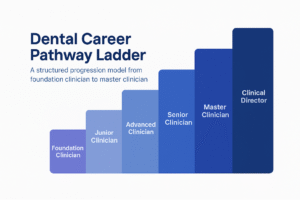 Imagine If Your Practice Had This
1. A clearly defined clinical career ladder
With meaningful, motivating step changes.
2. Transparent remuneration bands
Rewarding growth, mastery, and contribution.
3. Differential patient fees that feel fair and justified
Ensuring patients choose the clinician who best matches their needs and their budget.
4. A culture that recognises development
Encouraging clinicians to pursue training, communication skills, special interests, and excellence.
5. A recruitment and retention advantage
Clinicians join and stay because they can see a future with you.
Questions to Consider
- What would you call the steps on your clinical career ladder?
- How would you define and validate progression from one step to the next?
- What would fair remuneration ranges look like?
- How would you structure patient fees in a way that feels transparent and ethical?
- What cultural and financial benefits could this bring to your practice?
- How would your patients respond to increased choice, clarity and fairness?
- How much more engaged and valued would your clinicians feel?
Stepping Away From NHS Thinking Means Stepping Into Possibility
Private dentistry gives you freedom.
A clinical career pathway gives your team direction.
Differential pricing gives your patients clarity.
And together, they give your practice sustainability, fairness, excellence, and growth.
If you’d like, I can help you design:
- your clinical career ladder
- remuneration bands
- differential fee structures
- progression criteria
- communication frameworks
Just let me know and we can explore what would work best for your practice.