Introduction
Across Facebook groups and professional forums, there is renewed debate about whether associates, hygienists, and therapists are genuinely self-employed or, in reality, edging into employed status. Hidden beneath that surface conversation is a deeper, more fundamental issue: how remuneration shapes behaviour, ethics, and clinical outcomes.
How you remunerate someone is never just payment for what they have done. It is a motivational framework that directly influences how they behave, how they think about patients, and how they interact with the practice. It shapes culture. It shapes retention. It shapes trust.
And every remuneration model brings both intended and unintended consequences.
The Impact of Different Remuneration Models
Percentage-based pay
Many practices continue to pay percentage-based fees. It seems simple. It seems fair. Yet the behavioural impact is not neutral.
A percentage creates a clear incentive to increase the amount of chargeable dentistry delivered. At its best, this encourages productivity. At its worst, it risks overtreatment, compromised standards, and unnecessary intervention.
Not all overtreatment is malicious. For clinicians on very low percentages, the incentive to increase volume is strong. Conversely, those on high percentages often have little pressure to stretch themselves further. When a high percentage already funds a comfortable lifestyle, motivation based on money can quickly plateau.
Salary
A full salary removes the direct link between clinical activity and income. It offers stability, but it can also erode responsibility. When earning is no longer tied to treatment carried out, the amount of chargeable dentistry naturally decreases. Many practices have seen this through capitation-style contracts, where patients suffer supervised neglect as clinicians become disconnected from outcomes.
The hybrid model
More practices are now exploring a blended approach: a modest base salary for stability, with a percentage element linked to activity or health-based outcomes. This can align financial predictability for the practice with a fair earning structure for clinicians.
For this to work, both principal and clinician must engage in honest, transparent discussions about workload, expectations, and financial realities. Fixed costs must be met. Profit must be generated. The clinician must earn a living. None of this can be assumed. It needs to be planned.
The Problem with Focusing Only on Money
When recruitment decisions are based purely on financial drivers, the practice pays the price later.
Highly money-motivated clinicians can help generate income, but they may also:
- Overemphasise sales rather than care
- Struggle to build trust with patients
- Increase complaint rates
- Prioritise personal gain over team and patient needs
Patients are quick to sense when dentistry feels transactional rather than relational. Complaints rise. Stress increases. Team cohesion breaks down.
This is why recruitment must consider motivation at a deeper level.
Introducing Graves Drives: A Better Way to Understand Motivation
For many years I have encouraged principals to look beyond CVs and remuneration bands and to recruit using Graves Drives.
Graves Drives reveal the core motivators that shape how a person thinks, behaves, and contributes in a team. No one is fixed in one drive forever, and most people show a combination. They are not personality labels but motivational patterns. Understanding the graves drives of your team and prospect joiners, will enable you to predict their talents and trouble-spots, so you can recruit well.
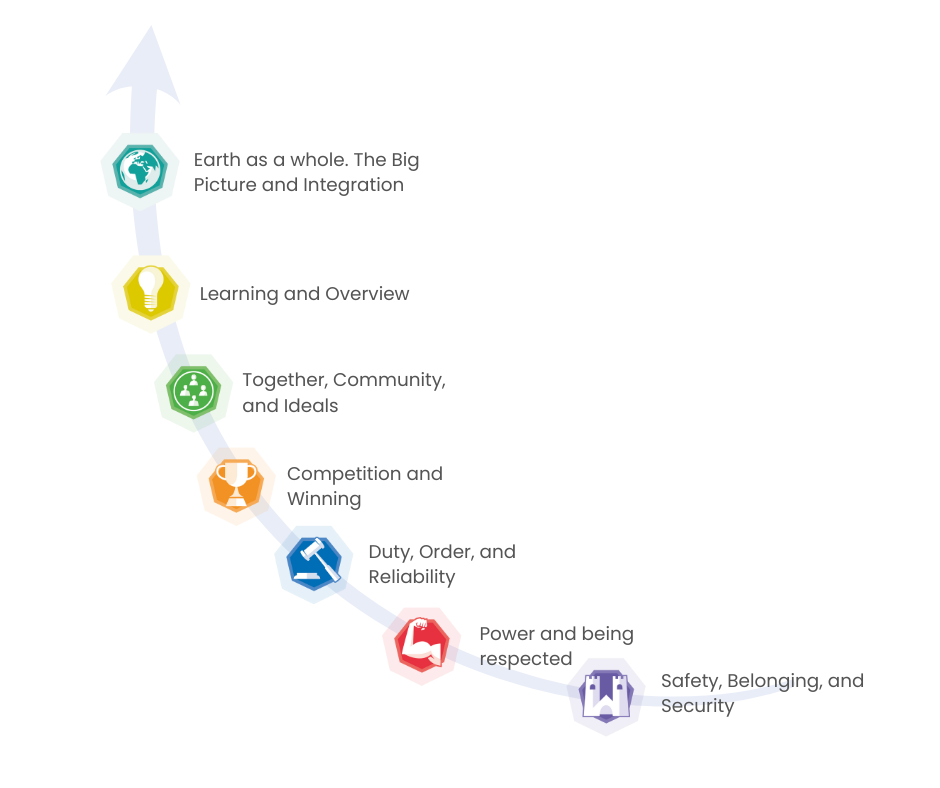
There are seven primary Graves Drives most relevant to dental practice culture. Three are individually focused (I). Four are team-focused (We).
Below is a clear summary of each drive, including the advantages, disadvantages, strengths, and weaknesses when you see them in a clinician or team member.
The Seven Graves Drives and How They Show Up in Dentistry

- Security / Safety
Core value: tradition, belonging, predictability
Orientation: We
Key phrase: The group is my world
Strengths in a dental team:
- Loyal and consistent
- Values long-standing patients and relationships
- Works well within established procedures
- Stable, reliable contributor
Weaknesses:
- Resistant to change
- Struggles with modernisation or innovation
- May prefer familiar systems even when improvement is needed
Naturally good at
- Long-term patient care / clinician patient relationships
- Compliance support
- Reception and continuity-based roles

- Power
Core value: autonomy, strength, dominance
Orientation: I
Key phrase: I do what I want, regardless of consequences
Strengths in a dental team:
- Decisive and confident
- Takes control in emergencies
- Very driven to achieve personal goals
Weaknesses:
- Can create conflict
- Likely to be a dominant dictatorial
- Undermine team culture
- Risk of prioritising personal outcomes over patient wellbeing
Naturally good at
- Crisis management
- Clinical leadership roles where firm decision-making is required
Not ideal in isolated roles dealing with vulnerable patients

- Duty / Order
Core value: discipline, predictability, rules
Orientation: We
Key phrase: Sacrifice now to be rewarded later
Strengths in a dental team:
- Excellent with protocols
- High standards and consistency
- Strong ethical foundation
- Good fit for practices with rigorous systems
Weaknesses:
- May struggle with flexibility
- Can become overly rigid or bureaucratic
- Risk of burnout if unable to adjust expectations
Naturally good at
- Compliance
- Clinical governance
- Roles requiring accuracy and precision

- Winning
Core value: achievement, progress, results
Orientation: I
Key phrase: Those who take chances win the world
Strengths in a dental team:
- Highly productive
- Targets are motivating
- Energetic, ambitious, and growth-orientated
- Will help the practice expand services and revenue
Weaknesses:
- Can be competitive rather than collaborative
- May focus on personal gain over collective progress
- Risk of overtreatment if not well supported
Naturally good at
- Achieving goals and targets
- Performance-driven roles
- Creative thinking to stand out

- Community / Together
Core value: harmony, cooperation, support
Orientation: We
Key phrase: Every voice matters
Strengths in a dental team:
- Excellent communicators
- Strong with anxious or vulnerable patients
- Natural team-builders
- Reduce conflict within the practice
Weaknesses:
- Can avoid difficult conversations
- May hesitate to make tough decisions
- Struggles in high-pressure performance-driven settings
Naturally good at
- Patient care coordination
- Preventing and resolving conflict
- Team leadership in relational, supportive practices

- Learning
Core value: curiosity, innovation, analysis
Orientation: I
Key phrase: Understanding creates development
Strengths in a dental team:
- Great with complex treatment planning
- Enjoys CPD and professional development
- Thinks critically and strategically
- Good at evidence-based practice
Weaknesses:
- May overthink simple decisions
- Can struggle with routine or repetitive work
- May disengage without intellectual challenge
Naturally good at:
- Personal and professional growth
- Educating others
- Running training sessions
- Clinicians developing special interests
- Clinical educators
- Quality improvement and clinical systems design

- Earth as a Whole
Core value: holistic care, balance, sustainability
Orientation: We
Key phrase: Everything is interconnected
Strengths in a dental team:
- Compassionate and values-driven
- Team building as seeing all aspects of the practice as important
- Good with prevention and long-term planning
- Contributes positively to culture and wellbeing
Weaknesses:
- May resist high-pressure environments
- Will struggle without out the whole picture
- May find it difficult to get started
Naturally good at
- Building relationships with patients
- Providing whole patient whole mouth dentistry rather than single tooth treatment plans.
- Preventative care
- Wellbeing-based practices
- Holistic or interdisciplinary clinics
How to Use Graves Drives in Recruitment and Retention
When recruiting:
- Identify which drives your practice culture needs
- Use questions that reveal motivators
- Match remuneration to motivation
- Avoid recruiting solely on technical skill or financial appetite
- Consider how each drive will influence patient experience
When clinicians and practices are misaligned in motivation, the result is disengagement, underperformance, or tension. When they are aligned, the result is stability, satisfaction, and a healthier business.
If you would like to Graves Drive evaluate your team, guidance on how to incorporate Graves Drives into your recruitment process, or how to assess the motivational fit of your current team, I would be happy to be of assistance.
Book a complimentary SPEAK WITH JANE or FREE CALL FRIDAY appointment through our website www.iodb.co.uk