Understanding Your Patients: The Power of Understanding Decision Strategies
As dentists we often focus on learning and developing clinical skills, and expertise. Unfortunately, this is not enough if you want to convert your treatment plans, and provide quality care. You must understand how your patients think and make decisions, understand them patients at a deeper level. Unfortunately, were not taught these skills at dental school and will need to learn this vital information post qualification.
People are not all the same, the way they think and make decisions varies from person to person. decision-making processes vary significantly. To truly connect with your patients and build trust, it’s essential to grasp the concept of “Convincer Strategies.” These are internal strategies your patients use to convince themselves about the decisions they make. When you understand how your patients convince themselves you can tailoring your approach for each patient.
What Are Convincer Strategies?
Convincer Strategies are the mental pathways through which individuals gather and process information to become convinced about something. We all have unique ways of evaluating trust, and these strategies are developed through our life experiences. For most people, it takes more than just one piece of information to be fully confident about something. They might need to see a pattern, multiple examples, or spend time with a person or idea before they feel assured.
As a dentist, understanding your patients’ Convincer Strategies is key to building trust and rapport. By recognizing how your patients become convinced, you can adapt your communication and approach to make them feel more at ease.
Do you know the 4 convincer strategies?
Automatic Convincer Mode (Innocent Until Proven Guilty)
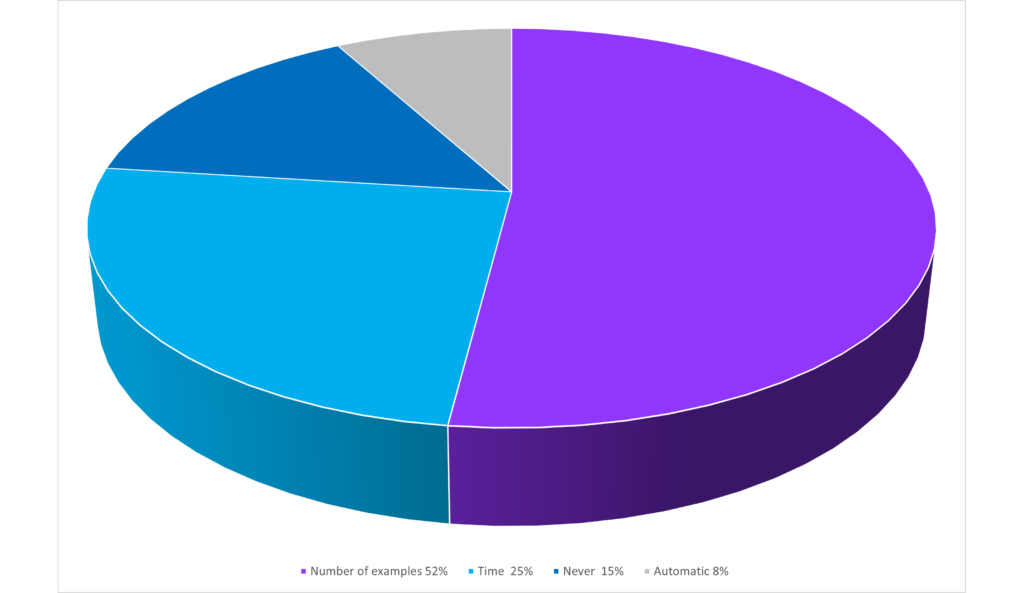
About 8% of the population have this mode. They trust quickly, using gut instinct and rely on very little information. Sometimes the decisions are too quick, which can lead to making hasty decisions. However, they might be less sceptical in low-risk situations.
Downside: They can jump to conclusions without sufficient evidence, which is risky, particularly in high-stakes situations. Automatic decision makers will often experience “Buyers remorse” and back out of decisions, or blame someone else if they realise they have made a poor choice.
Patients with an automatic convincer strategy may lead to a rapid conversion rate of treatment plans and they will also be those most likely to complain and challenge treatment plans later down the line.
Number of Examples Convincer Mode
This is the most common mode, 52% of the population. People in this mode need to see a certain number of examples before they’re convinced of something. They often require consistency in information.
Downside: They can be easily influenced by the repetition of information, even if it’s not necessarily true.
Number of example patients are your regular attenders who will decide to go ahead with treatment, after they have had several conversations with you and other members of the team, your nurse, hygienist, and patient care coordinator. Because this decision-making strategy is the most common it is important to design your patient journey and consent process to include several ‘touches’ where the treatment plan is discussed.
Again, Be cautions and where possible avoid making changes to your plan to try and encourage them to speed up making their decision, this will delay the decision because it resets the number of examples the patient needs to be confident to make a decision.
Period of Time
This group is 25% of your patient base, they need to see an idea or experience hold up over a specific period. They might require extended interaction before they’re convinced.
Downside: Time can be subjective, and they may overestimate the value of time spent in certain situations.
For period of time patients to go ahead with treatment they will need for you and your team to discuss treatment with them consistently over a period of time, the length of time will vary from patient to patient. You will need to be prepared to discuss the treatment with and allow them to reflect until they have made a decision over a period of time. The period of time will vary from patient to patient, it may be a day, a week, a month, 6 months or some other time frame. Using a patient care coordinator to make follow up calls over time will support this cohort of patients in feeling comfortable in making decisions. Again, be cautions and where possible avoid making changes to your plan to try and encourage them to speed up making their decision, this will delay the decision because it re starts the period of time clock.
Never (Consistent Convincer Mode)
Approximately 15% of people fall into this category. They are highly sceptical and almost never convinced. Trust is hard to earn and easy to lose. To make a decision this group of people has to make their decision again on every occasion. These patients will need you or your patient coordinator to re-explain the treatment plan at every appointment. Fortunately, this is in alignment with consent being an ongoing process not a signature.
Downside: It can be challenging to establish long-term relationships or gain trust with these individuals. Continual self-doubt can also be a drawback.
Understanding the decision-making strategies of your patients will help you tailor your approach and communication, making your patients feel more comfortable and ultimately strengthening your patient relationships. Hopefully it will help you avoid feeling frustrated when patients are unwilling to agree to a treatment plan at the examination appointment, only 8% of your patients are likely to do this. Now you will be able to design your patient journey, and consent process so it is compatible with your patient’s psychology.
A personalised approach in patient decision making strategies will lead to happier patients and fewer complaints.