Are you starting to see white spaces appearing in your appointment book?
Are you hearing patient putting treatment off until the next exam?
Are you noticing your level of income dropping?l
Would you like to learn some questions that will reverse the trend?
As a dentist, I know that you want to provide the best treatment possible for your patients. Unfortunately, clinical skills are not enough. Without the ability to build strong rapport, deep trust through understanding how your patients are thinking, converting treatment plans is more difficult than it needs to be.
Are you expecting your patients to say “Yes” as soon as you present their treatment plan?
Do your mentally beat yourself up when they don’t say yes Immediately?
Would you like to understand why 92% of your patients are unlikely to say “Yes” at the first visit?
Only through asking the right questions, you can tailor your approach to each patient to create a more comfortable and trusting environment. Here are some essential questions to help you uncover your patients’ decision-making process. \
1. How do you know someone is good at their work?
Exploring the qualities and attributes your patients associate with competence can be invaluable. Knowing what they value in a professional can guide your interactions with them. For example, if they value transparency and clear explanations, you can focus on providing detailed information about their dental health and procedures. This question will reveal if your patient evaluates evidence, through sight, sound, feelings, or structure.
2. How many times do you need to have something demonstrated (see, hear, feel, structure) before you are convinced it is a good thing?
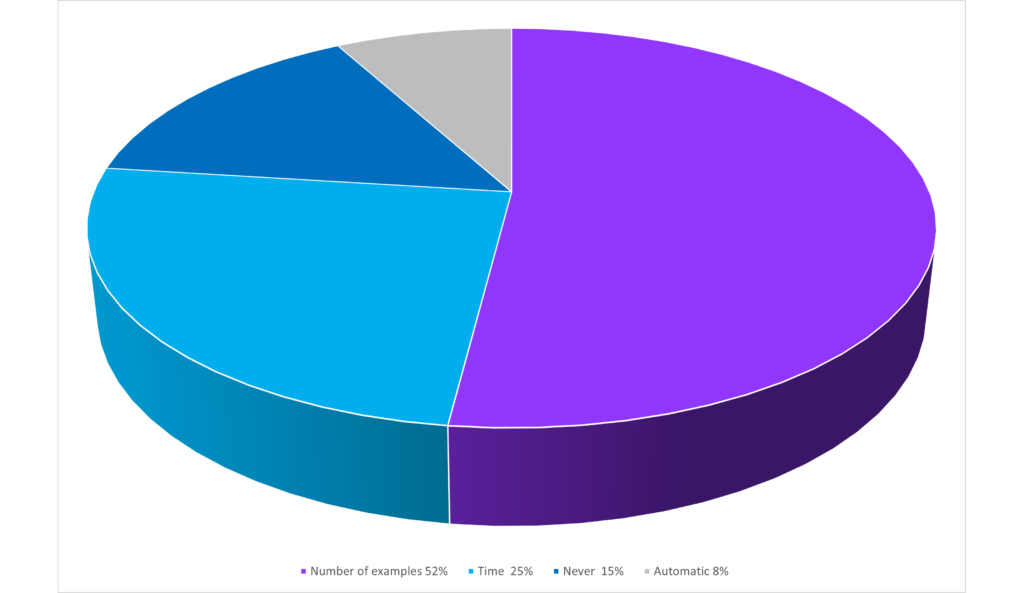
This question delves into your patient’s trust in skills and expertise. Understanding the number of demonstrations or experiences required for trust is essential. Some patients might need to witness consistent proficiency over time, while others may be more open to trusting your expertise after just one successful treatment. 52% of the population have an internal number of times strategy. For these patients you will need to design your patient journey so that it has the right number of touches to discuss the treatment plan. If you don’t have the time to discuss treatment plans, using a patient care coordinator will help.
3. How long do you have to consider something before it’s the right time to act?
This question can shed light on your patient’s decision-making timeline. Some individuals prefer to weigh their options and take time before deciding, while others are more inclined to make quick decisions. Understanding this aspect can help you adjust your recommendations and treatment plans to align with their preferred pace. 25% of the population have a time strategy for decision making. It is essential that you provide these patients with time to reflect and decide.
4. What do you need to be convinced that you know something?
This question provides insight into your patient’s threshold for personal knowledge. Understanding how they confirm their own understanding can be crucial in explaining treatment plans and procedures effectively. For instance, if they prefer visual aids or in-depth explanations, you can tailor your communication to meet these needs. This question will help you identify the automatic decision makers (8%) and those who are constantly deciding (15%)
By asking these questions you can learn more information about your patient. What is key is the structure of how the patient answers and less so about what they say. Actively listening to how your patient answers, as well as what they say. will enable you to personalise your patient interactions, supporting your patient in making the best choices for their treatment.
If you would like to understand more about understanding your patients unconscious communication, e mail me Jane@IODB.co.uk