Why the Words You Use Could Be Setting You Up for Complaints
Dentistry is stressful enough without adding unnecessary problems of our own making. Yet many dentists are unknowingly setting themselves up for complaints, not because of poor clinical skills, but because of the names they give to treatments and procedures.
In a profession already riddled with anxiety, fear, and colleagues leaving the career altogether, we must ask: how much of this stress is avoidable if we paused and thought differently about the way we communicate?
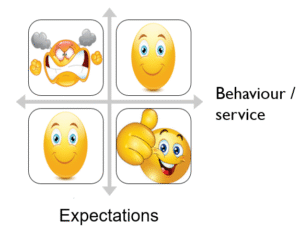
The Problem of Expectations
Richard Oliver’s work on Expectation (Dis)Confirmation Theory highlights something we instinctively know. When expectations are exceeded, people are delighted. When they are not met, disappointment often turns to anger.
As dentists, we want to reassure patients that they are in safe, capable hands. That is appropriate. Yet the words we use can unconsciously set expectations that, when not fulfilled, result in unnecessary dissatisfaction and complaints.
Take a moment to reflect on this:
- A practice calling itself The Perfect Smile.
- A treatment named Immediate Replacement Denture.
Both sound attractive from a marketing point of view. But what happens when reality does not align with the expectation those words create?
If your idea of a “perfect smile” differs from your patient’s, the risk is a mismatch between promise and delivery.., this is likely to result in an expensive remake at best and a long protracted complaint or worse if the patient perceives they were given a false impression about the treatment provided.
If an “immediate replacement denture” inevitably stops fitting within three- six months, the patient may feel misled — even if you explained it at the outset. Patients forget what you say, forget what you do, and they remember how you made them feel.
Words That Reduce Complaints and Stress
Consider instead renaming items in a way that is transparent and expectation-friendly:
In those situations where tooth has been extracted and a restoration needs to be placed to preserve space an provide or aesthetics until the definitive restoration can be replaced, have you considered,
- Immediate replacement denture → “Healing denture” or “Interim space-filling denture”
- Rochette bridge → “Healing bridge,” space maintaining bridge, or “Transitional bridge.”
These names signal from the beginning that the solution is temporary reducing the chance of a patient feeling deceived or short-changed later.
Patients increasingly turn to Google or AI to research treatments. Conventional terminology often implies permanence. Alternative, expectation-setting names better align reality with patient perception.
A Practical Limitation — and an Opportunity
Of course, NHS software treatment codes lock you into preset language. But once you create private treatment plans — whether for individual treatment plan or across your practice — you gain the freedom to redefine your terms. This is your opportunity to innovate, reduce predictable complaints, and improve satisfaction for both patients and your team.
The Bigger Picture
Words matter. They shape patient expectations, influence emotions, and determine whether an experience ends in trust or complaint. By thinking differently about something as simple as naming, you can:
- Prevent avoidable stress and dissatisfaction.
- Protect your reputation and clinical integrity.
- Build stronger, more trusting patient relationships.
- Create a calmer, more fulfilling practice environment.
Final Thought
We cannot remove all the challenges of dentistry, but we can remove many of the predictable, avoidable ones. Rethinking the words you use is one simple but powerful way of making your professional life easier, happier, and richer — in every sense of the word.
What do you think? Have you experimented with alternative treatment names? I would love to hear your thoughts in the comments below or by email at Jane@IODB.co.uk.