Recruitment is one of the most persistent challenges in dentistry. Practice owners struggle to attract and retain the right associates, while many associates move from practice to practice, never quite finding somewhere they can truly settle.
On the surface, the reasons appear practical. Percentages. UDA values. Diary occupancy, Location, Working hours, NHS :PVT, Support etc.
Yet beneath these visible issues lies something far more influential.
When there is a mismatch in values, motivations, and philosophy is when the relationship deteriorates. Understanding your personal and practice developmental stage provides the magical wisdom you are looking for.
This is where Graves Drives provides a deeply useful framework for understanding why recruitment so often fails, despite everyone’s best intentions and how you can make It work.
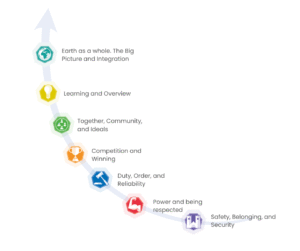
The Evolution of a Dentist Through the Graves Drives
As a clinician progresses through their career, their primary drivers evolve. Each stage brings different needs, expectations, and definitions of fulfilment at work.
Beige – Survival
At the very beginning, or during periods of stress or transition, the focus is simply survival. Income security, basic support, and stability matter most. The clinician needs safety, predictability, and reassurance.
Purple – Belonging and Safety
Here, connection becomes important. A sense of being looked after, part of a close-knit team, and working within familiar routines. Loyalty, trust, and emotional safety are key.
Red – Power and Autonomy
Confidence grows. The clinician wants autonomy, influence, and recognition. They may challenge systems, push boundaries, and seek freedom to work in their own way.
Blue – Order and Structure
Now clarity, fairness, and standards matter. Clear leadership, defined processes, consistency, and rules create psychological safety. The clinician wants to know what is expected and what “good” looks like.
Orange – Achievement and Success
Focus shifts to growth, income, efficiency, and outcomes. Targets, performance, reputation, and progression become motivating. The clinician wants opportunity and reward for effort.
Green – Values and Relationships
Meaning, collaboration, and shared values come to the forefront. The clinician seeks a caring culture, open communication, and patient-centred decision-making.
Yellow – Systems Thinking
At this stage, complexity is understood and embraced. The clinician values autonomy within systems, flexibility, and intelligent leadership that allows different styles to coexist.
Turquoise – Purpose and Contribution
For some, work becomes about contribution beyond the self. Purpose, service, and impact matter more than status or income. The practice becomes a platform for collective wellbeing.
Not every clinician reaches every stage, and that is entirely appropriate. What matters is knowing where you are now.
Practices Evolve Too
No stage is right or wrong. Problems arise when there is a mismatch.
Practices are not static environments. Just like clinicians, they evolve through recognisable stages of development, each with its own focus, leadership style, philosophy, and cultural feel. Understanding this evolution helps explain why the same practice can feel supportive at one point in its life and deeply uncomfortable at another.
Beige – Survival and Continuity
At this stage the practice is focused on staying open. Leadership is reactive and practical, dealing with immediate problems such as staffing gaps, cash flow, or keeping diaries full. Systems are minimal, decisions are made day to day, and culture is unspoken rather than designed. The underlying value is survival.
Purple – Safety, Loyalty, and Belonging
The practice operates like a close family. Leadership is protective and supportive, with an emphasis on loyalty, familiarity, and “how we do things here”. Culture is shaped by long-standing relationships and traditions. The focus is on security, togetherness, and looking after one another.
Red – Authority and Control
Strong personalities dominate. Leadership is directive and decisive, often driven by the owner’s vision and energy. Speed and results matter more than consensus. The culture can feel dynamic and powerful, but also unpredictable. Values centre on strength, autonomy, and personal authority.
Blue – Order, Standards, and Fairness
The practice seeks stability through structure. Leadership becomes procedural and rule-based, with clear policies, protocols, and defined roles. Consistency, compliance, and fairness are central. The culture values reliability, professionalism, and doing things properly.
Orange – Achievement and Growth
Here the practice is performance-driven. Leadership is strategic and target-focused, encouraging efficiency, innovation, and measurable success. Financial performance, reputation, awards and expansion matter. The culture rewards ambition, productivity, and results.
Green – Values, Relationships, and Care
The emphasis shifts to people. Leadership is collaborative and emotionally intelligent, prioritising communication, inclusion, and wellbeing. The practice philosophy becomes explicitly patient-centred and team-centred. Shared values, trust, and psychological safety define the culture.
Yellow – Systems Thinking and Integration
Leadership becomes flexible and adaptive. The practice understands that different people are motivated by different things and designs systems that allow autonomy within structure. Culture supports learning, reflection, and intelligent decision-making. Values centre on effectiveness, integration, and sustainability.
Turquoise – Purpose and Collective Wellbeing
At this stage the practice sees itself as part of something larger. Leadership is purpose-led, focusing on contribution, service, and long-term impact. Culture is grounded in meaning, connection, and shared responsibility for wellbeing beyond the practice walls.
Each stage offers different qualities in a job and will suit different clinicians at different points in their careers. No stage is right or wrong. Difficulties arise when a clinician and a practice are operating from different developmental levels, making it hard for either to feel understood, valued, or at home.
Where Recruitment Breaks Down
Difficulties occur when a clinician and a practice are operating from different evolutionary levels.
A Yellow or Green clinician will feel constrained and frustrated in a Red or Blue practice.
A Red or Orange clinician may feel stifled or judged in a Green practice.
A practice seeking structure and consistency will struggle with a clinician who values autonomy above all else.
Neither party is wrong. They are simply speaking different internal languages.
Better Questions Create Better Matches
Understanding where you are allows for better conversations and better decisions.
As a clinician, you might want to ask yourself
how do I need to be, so that I can support and engage with a practice so that together , we can achieve our personal and shared goals?
You may choose to ask a potential practice:
- What are your practice goals, values, culture and philosophy?
- How will you manage, lead, support, and inspire me to do assist in helping you achieve your practice goals
- What behaviours predominate here?
- What does success look like in this practice?
As a practice,
You could ask yourself, as a practice how should who connect, engage, support an associate to join us in achieving our goals ?
you might ask a candidate:
- How should we connect, engage, and support you to assist us In achieving our goals?
- What environment helps you do your best work?
- What outcome are you seeking from this role
In both cases, clarity comes from understanding what you offer, what you require, and the outcome you want to achieve together.
Recruitment by Design, Not by Chance
Finding your ideal role cannot be left to chance.
Equally, building a stable, fulfilled clinical team requires more than good contracts.
Understanding Graves Drives helps you recognise what matters to you now, what is likely to matter in the future, and how to make choices that allow you to grow rather than feel stuck.
To thine own self be true, and you are far more likely to find a place where you can be happy, effective, and settled.
Core driving questions and focus at each developmental stage, these apply to both a practice and clinician. Understanding your funamental driver and that of a practice, will help you find a fit, so you no longer have to bounce from practice to practice or clinician to clinician
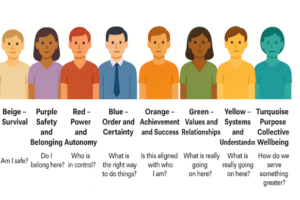
Beige – Survival
Core question:
- Am I safe
Focus:
Immediate needs, relief from pressure, basic stability.
Purple – Safety and Belonging
Core question:
- Do I belong here?
Focus:
Immediate needs, relief from pressure, basic stability.
Red – Power and Autonomy
Core question:
- Do I have control and autonomy?
Focus:
Independence, influence, recognition, and personal authority.
Blue – Order and Certainty
Core question:
- What is the right way to do things?
Focus:
Structure, clarity, standards, and predictability.
Orange – Achievement and Success
Core question:
- How can I be more successful?
Focus:
Outcomes, growth, efficiency, status, awards and reward.
Green – Values and Relationships
Core question:
- Do I belong?
Focus:
Connection, collaboration, empathy, and shared purpose.
Yellow – Systems and Understanding
Core question:
- How are these elements connected and what can we learn?
Focus:
Perspective, integration, flexibility, and intelligent design.
Turquoise – Purpose and Collective Wellbeing
Core question:
- How do we serve something greater?
Focus:
Meaning, contribution, interconnectedness, and stewardship.
If you would like to learn more about Graves Drives and how they can support you in finding the right role or the right clinician, you are welcome to get in contact and obtain your personalised profile.

Perfect Pairings
Where energy, expectations, and culture naturally support one another.
Beige Clinician + Beige / Purple Practice
Why it works:
The practice offers stability, predictability, and human care. Leadership is protective and practical, allowing the clinician to recover, stabilise, and regain confidence.
Purple Clinician + Purple / Blue Practice
Why it works:
Belonging is combined with gentle structure. The clinician feels safe, valued, and guided without being pushed too fast.
Red Clinician + Red / Orange Practice
Why it works:
Energy meets energy. The practice allows autonomy, pace, and challenge. Leadership is decisive and respects strong personalities.
Blue Clinician + Blue Practice
Why it works:
Order matches order. Expectations are explicit, processes are clear, and fairness matters to everyone.
Orange Clinician + Orange Practice
Why it works:
Both are motivated by growth, performance, and results. Success is measured and rewarded.
Green Clinician + Green Practice
Why it works:
Values and relationships are shared. Decisions are people-centred and communication is open.
Yellow Clinician + Yellow Practice
Why it works:
Both can hold complexity and difference. The practice allows autonomy within intelligent systems.
Turquoise Clinician + Turquoise Practice
Why it works:
Purpose aligns deeply. Work is seen as contribution rather than transaction.

Nightmare Pairings
Where values, expectations, and decision-making styles clash.
Green Clinician + Red Practice
Why it fails:
The clinician seeks care and collaboration, while the practice operates through dominance and control.
Result:
- Emotional exhaustion
- Feeling unheard or dismissed
- Loss of confidence and trust
Red Clinician + Blue Practice
Why it fails:
The clinician wants autonomy, but the practice prioritises rules and compliance.
Result:
- Power struggles
- Frustration with “bureaucracy”
- Frequent conflict
Yellow Clinician + Purple Practice
Why it fails:
The clinician sees systems and patterns, while the practice relies on tradition and “how we’ve always done it”.
Result:
- Feeling constrained and misunderstood
- Innovation blocked
- Quiet disengagement
Orange Clinician + Green Practice
Why it fails:
The clinician is driven by targets and growth, while the practice prioritises consensus and wellbeing.
Result:
- Resentment about pace and performance
- Perception of being held back
- Value clashes
Blue Clinician + Red Practice
Why it fails:
The clinician needs consistency and fairness, while the practice is unpredictable and personality-led.
Result:
- Anxiety and mistrust
- Moral distress
- Eventual withdrawal
Beige Clinician + Orange Practice
Why it fails:
The clinician needs safety, while the practice demands performance and resilience.
Result:
- Overwhelm
- Burnout
- Early exit
The Key Insight
Most recruitment failures are not about competence, commitment, or goodwill. They are about developmental mismatch.
When clinicians and practices understand their own Graves Drive and recognise it in others, recruitment becomes intentional rather than accidental. The goal is not to change who you are, but to find a place where you can grow, contribute, and evolve together rather than pull in opposite directions.
If you would like to learn more about Graves Drives and how they can support you in finding the right role or the right clinician, you are welcome to get in contact and obtain your personalised or practice profile
www.Iodb.co.uk