What Are Your Patients Really Buying?
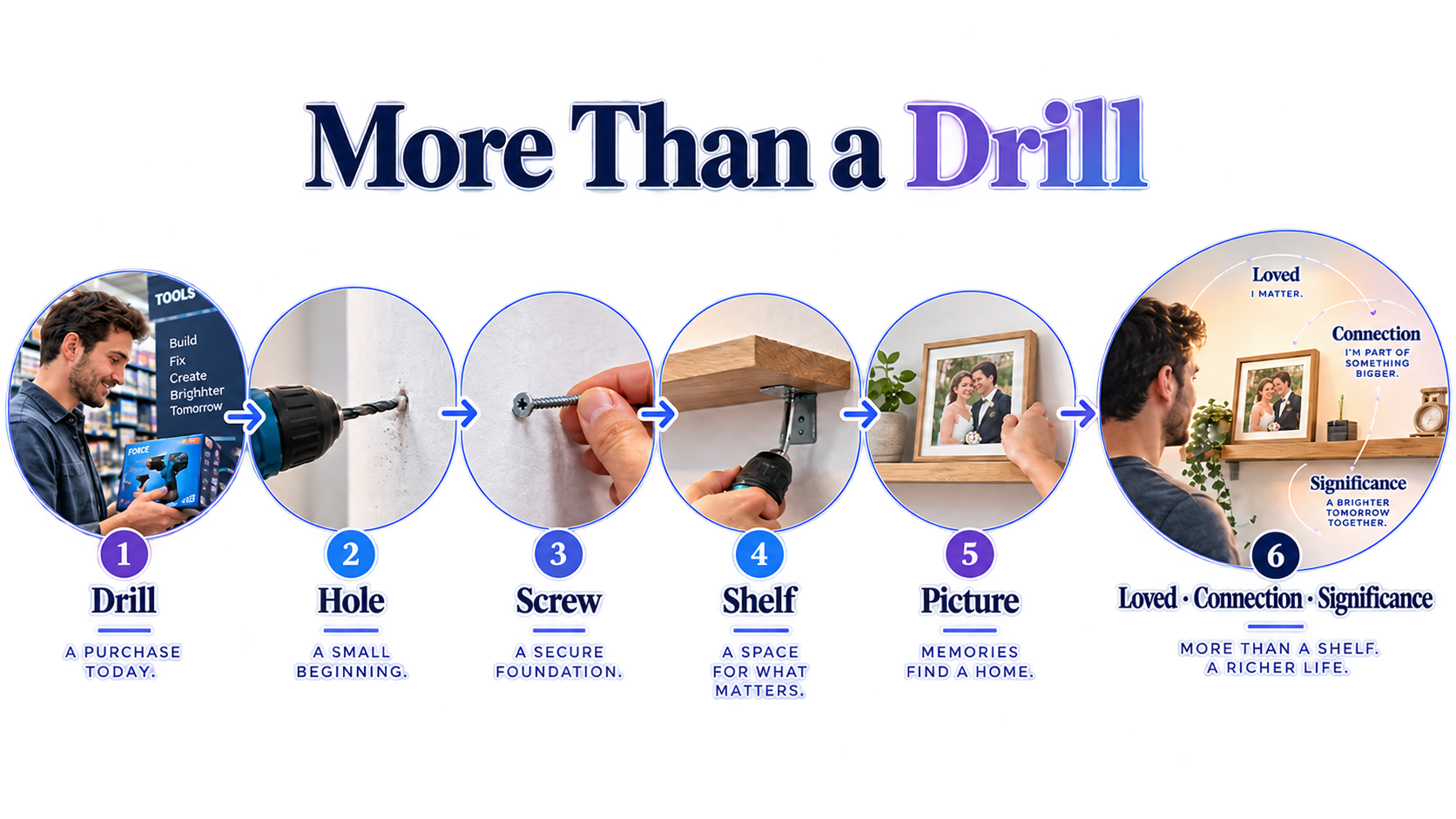
When someone walks into a hardware shop and buys a drill, what are they really buying?
A drill?
Probably not.
Perhaps they are buying the ability to make a hole.
They probably do not particularly want a hole either.
Maybe they want the hole so they can put a screw into the wall. Possibly they want the screw because they want to put up a shelf.
Even the shelf may not be what they are really buying.
Perhaps they want the shelf so they can display their wedding photograph.
Then every time they look at that photograph, they are reminded of someone they love, a special day, a sense of belonging, connection and significance.
Suddenly, they are not buying a drill at all, they are buying what the drill ultimately allows them to feel – being loved.
The drill is simply the vehicle that gets them there.

What are your patients really buying?
When patients come into your dental practice, they may ask about:
- whitening
- orthodontics
- implants
- veneers
- replacing missing teeth
- improving their smile
But is that really what they are buying?
A patient rarely wakes up desperately wanting a dental implant. What they want is the feelings they believe having that implant will give them.
Our motivations can often be understood through six fundamental human needs:
- Certainty
The need to feel safe, secure, comfortable and in control.
A patient may want implants because they are tired of worrying about whether their denture will move while they are eating or speaking or feeling embarrassed if they do. Your patient may want to feel secure enough to order whatever they like in a restaurant without constantly thinking and worrying about their teeth.
The treatment may be an implant.
What they are buying may be security, reassurance and peace of mind.
- Variety
The need for change, stimulation, freedom and new experiences.
Maybe your patient has hidden their smile for years and now wants to do something different. They are now divorced, widowed or an empty nester. Now is their time to wear brighter lipstick, smile openly in photographs, date again or stop avoiding social situations.
The treatment may be whitening or orthodontics.
What they are buying may be freedom, excitement, possibility and a sense that something has changed.
- Significance
The need to feel valued, worthy, important and confident in ourselves.
A patient may tell you they want straighter or whiter teeth, but underneath that request may be a desire to feel more attractive, professional or confident.
Perhaps they currently walk into meetings, or attend online events worrying that colleagues judge them on their crooked, dark teeth.
Perhaps they want a job promotion and know a first step is to have the ability to look in the mirror and feel good about the person looking back at them.
The treatment may be whitening or ortho, yet what they are buying could be confidence, self-worth, pride or feeling good about themselves.
- Connection and belonging
The need to feel close to other people, accepted, loved and part of something.
Perhaps a patient avoids photographs with their family because they dislike their smile, perhaps they cover their mouth when they laugh or don’t laugh at all. Maybe their family think they are sad in their presence or don’t enjoy their company. A family distance or rift could occur.
The treatment may be periodontal treatment and restorations, and what they are buying may be connection, acceptance, intimacy, belonging and the freedom to join in, because they can smile.
- Growth
The need to learn, develop, improve and become more of the person we want to be.
For some patients, dental treatment is part of a wider holistic approach to health and well being.
Your patient may have decided to improve their health, change career, become more confident, look after themselves differently or finally address something they have put off for years.
The dental treatment you provide for them represents progress.
You may be providing basic treatment that has been put off for years, and your patient is buying may be feelings of achievement, development, progress and a sense of moving forwards.
- Contribution
The need to give, support others and feel that we are making a difference beyond ourselves.
You may have more elderly patients who have suddenly expressed wanting to have treatment that they have said no to for years, such as replacing crowns with poor marginal integrity. Or taking their perio seriously. Now they want to improve their health because they want inspire or motivate their children or grandchildren.
Another patient may want to be healthy enough to do a 6 moths overseas volunteering role.
To you it may be just treatment, yet to your patient it is about the feeling of better health that gives them the confidence and self-belief that then enables them to give to others.
What some see as dental treatment to your patient maybe buying purpose, fulfilment and the ability to contribute.
Your patients will rarely have only one motivation, it will be a cluster of two or three motivators.
The patient who asks about implants might be seeking certainty because they want to eat without worrying, connection because they want to enjoy meals with their family, and significance because they want to smile without feeling self-conscious. Yet another and implant might provide variety, being able to eat out in different restaurants or countries, growth, as the implant gives then to broaden their horizons in life, and contribution as they have the confidence to become a public speaker and share their wisdom.

This is why two patients asking for exactly the same treatment may be buying something completely different.
The dentistry is the vehicle, the destination is always an emotion, experience or feeling.
Can you discover what really matters to your patient?
This is why skilful communication is so important for dentists and all team members.
Do you and your team have the skills and the questioning framework that allow you to move beyond:
“What would you like us to do to your teeth?”
and discover:
“Why does this matter to you?”
Because when you understand what is genuinely motivating someone, the conversation changes, you are no longer simply presenting a treatment, you are helping the patient understand whether a particular treatment can help them achieve something that matters to them.
Three benefits of understanding your patient’s emotional drivers
- The patient feels genuinely heard and understood
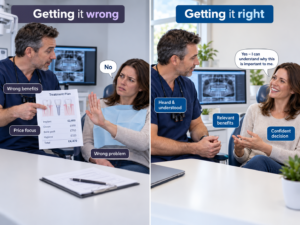
When you know how to explore what sits behind the request for treatment, the conversation becomes about your patient, not merely their teeth. This builds trust. Your patients will feel that you understand what matters to them ad you stop being a pushy dentist always selling.
- You can present treatment in a way that is relevant to them
Different patients can choose exactly the same treatment for completely different reasons. One person may want orthodontics because they want greater confidence, another may be concerned about function, yet another may want to feel comfortable smiling at their child’s wedding.
If you understand the motivation, you can explain the relevant benefits without bombarding the patient with information that does not matter to them.
- Patients can make better, more confident decisions
When patients connect a proposed treatment with their own goals, values and desired outcome, the decision becomes more meaningful and motivational. At this point you and your patients are able to work in partnership, minimising failed appointments, no more unpaid bills, and the patient is engaged with the advice you give them.
Rather than thinking:
“Do I want to spend £5,000 on my teeth?”
they may be considering:
“How important is it to me to be able to eat, smile, speak or live differently?”
A very different decision.
What happens when you do not discover what is really motivating your patients?
There are risks for both the patient and the clinician.
- You present the wrong benefits
When you assume we know what matters, you may enthusiastically explain aesthetics to somebody motivated primarily by function, or longevity to somebody whose greatest concern is confidence. The information may be accurate, but it fails to connect and the treatment plan remains a plan.
- Price becomes the focus of the conversation
When your patient cannot clearly see the value or feel how treatment connects with what is personally important to them, all they are left with is the procedure and the price. This is when your treatment plan is hawked round other practices for other clinicians to undercut you.
- You risk solving the wrong problem
Perhaps most importantly, if you do not understand the outcome the patient is really seeking, we can provide technically excellent dentistry and still leave the patient disappointed – Disappointed patients complain.
You may have done technically brilliant dentistry yet the result the patient was hoping for and that they thought the treatment would change for them has not changed at all.
Discovering motivation is not a sales technique, it is part of genuinely patient-centred care.
What is your patient really buying?
The next time a patient asks you or a team member about whitening, orthodontics, implants or another form of treatment, resist the temptation to move immediately into explaining the options.
Become curious.
What are they moving away from and what are they moving towards?
What has prompted them to ask now?
What are they anticipating having the treatment will change for them?
What will they be able to do, think or feel that they can’t do now?
Why does this matter?
Your patients are not buying whitening.
They are not really buying orthodontics.
They are not really buying an implant.
Just like the person in the hardware shop was never really buying a drill.
They are buying what they believe that treatment will allow them to experience, do or feel.
They are buying security, freedom, confidence, pride, connection, belonging, progress, fulfilment or purpose.
Until we, as a profession, understand that, we will not understand what our patients are asking us for.